








< Blogs

3PL vs 4PL: Which Logistics Solution is Right for Your Business?

Vivan Z.
Created on December 14, 2024 – Last updated on February 6, 20257 min read
Written by: Vivan Z.

3vs4

Ever wondered, “What is a 3PL? What is a 4PL?” These terms might sound like jargon, but understanding them is essential for businesses aiming to optimize logistics and supply chain management. Whether you’re a small e-commerce seller or a global manufacturer, the right logistics partner can make or break your operations. Let’s dive into what 3PL and 4PL mean, their differences, and how to choose the best solution for your business.

What Is a 3PL?

A 3PL (Third-Party Logistics) provider is a company that handles specific logistics functions for your business. Think of it as outsourcing transportation, warehousing, or distribution tasks to a specialist.
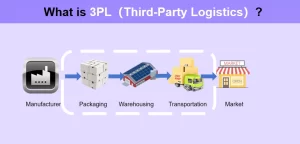
What is 3PL 4

For example, if you run an e-commerce store, a 3PL can store your products in their warehouse, pick and pack orders, and ship them to your customers. Their expertise and infrastructure streamline logistics, allowing you to focus on growing your business.

Now, imagine a small business selling home decor online. Partnering with a 3PL means their products are stored in a central warehouse. When a customer places an order, the 3PL picks, packs, and ships it. The result? Faster deliveries and happier customers without the hassle of managing inventory and shipping.

What Is a 4PL?

A 4PL (Fourth-Party Logistics) provider takes logistics management to the next level. Unlike a 3PL, which focuses on execution, a 4PL acts as a strategic partner overseeing your entire supply chain.
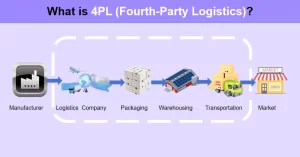
What is 4PL

Unlike 3PL, which primarily provides businesses with tangible and specific logistics operations, 4PL acts more like a “commander,” leveraging extensive logistics management experience, information technology, and available resources to deliver optimized and integrated supply chain solutions, ultimately reducing business costs.

4PLs integrate multiple 3PLs, manage vendors, and provide end-to-end visibility. They ensure that every aspect of the supply chain—sourcing, transportation, warehousing, and distribution—is optimized and aligned with your business goals.

Let’s say you’re a global electronics brand sourcing components from Asia, manufacturing in Europe, and distributing to North America. A 4PL coordinates multiple 3PLs across these regions, ensuring raw materials arrive on time, production schedules stay on track, and finished products reach customers efficiently.

By providing centralized oversight and advanced analytics, a 4PL helps reduce costs, mitigate risks, and improve supply chain agility.

Difference Between 3PL and 4PL

While both 3PL and 4PL aim to streamline logistics and improve supply chain efficiency, they differ significantly in their scope, responsibilities, and level of involvement in your business. 3PL focuses on executing specific logistics tasks, while 4PL takes on the broader responsibility of managing and optimizing the entire supply chain, offering more comprehensive strategic support and technology integration.

The following table highlights the key differences between 3PL and 4PL in terms of roles, responsibilities, technology, cost helping you understand which solution might be the best fit for your needs.
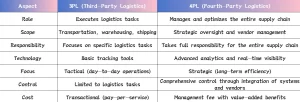
3PL and 4PL in terms of roles

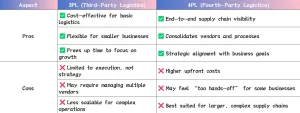
The following table outlines the pros and cons of 3PL and 4PL to help you understand the benefits and potential drawbacks of each option.

3PL vs 4PL

Key Takeaways:

1.If you need support with specific logistics tasks like transportation or warehousing, go for a 3PL.

2.If you require full supply chain management and strategic oversight, a 4PL is the better choice.

3.As your business grows and logistics complexity increases, you may start with a 3PL and transition to a 4PL for enhanced coordination and efficiency.

Choosing the Right Solution for Your Business

Choosing between 3PL and 4PL is not a one-size-fits-all decision. The best option depends on the specific needs of your business, including its size, complexity, and long-term goals. Let’s break this down to help you make the right choice:


1. Business Size and Scale

•  Small Businesses and Startups:
If you’re just starting out or running a small operation, a 3PL provider might be your ideal choice. It offers exactly what you need: transportation, warehousing, and shipping services. You won’t have to invest heavily in logistics infrastructure, and you can focus on growing your business while leaving the execution to experts.

•  Medium to Large Businesses:
As your business grows and your supply chain becomes more complex, a 4PL might be the better fit. A 4PL takes on a strategic role, coordinating multiple 3PLs, optimizing processes, and managing vendors. This allows your team to focus on core operations while the 4PL ensures your entire supply chain runs smoothly.


2. Operational Complexity

•  Low Complexity Operations:
If your logistics requirements are straightforward, such as shipping from a single warehouse to customers, a 3PL is sufficient. They’ll handle the daily operations efficiently, ensuring orders are fulfilled on time.

• High Complexity Operations:
For businesses with multi-region supply chains, cross-border shipping, or high variability in demand, a 4PL is essential. They can streamline processes, use data analytics for decision-making, and ensure you stay competitive in a global market.


3. Long-Term Business Goals

•  Short-Term Cost Control:
A 3PL is ideal for businesses prioritizing cost efficiency in the short term. By outsourcing warehousing and transportation, you eliminate upfront investment in infrastructure while still meeting customer expectations.

•  Strategic Growth and Optimization:
If you’re aiming for long-term growth, a 4PL helps align your logistics strategy with your business objectives. They provide end-to-end visibility, optimize the supply chain, and implement scalable solutions that grow with your business.


4. Cost vs. Value

•  3PL Costs:
A 3PL typically charges for specific services like storage, shipping, and handling. While these costs are straightforward, you may need to manage additional logistics vendors if your business grows.

•  4PL Costs:
A 4PL might seem more expensive upfront due to their broader responsibilities. However, they bring added value by reducing inefficiencies, consolidating vendors, and leveraging technology for cost savings over time.

The following table summarizes key factors to consider when choosing between 3PL and 4PL based on business size, operational complexity, focus area, and cost considerations.
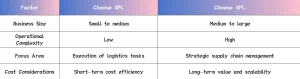
choose 3PL or 4PL

Transition to DropSure: Simplify Your Logistics

Still feeling overwhelmed by logistics? Imagine having a partner that not only handles fulfillment but also optimizes your entire supply chain. That’s where DropSure comes in.

DropSure offers a seamless solution for businesses, combining efficient dropshipping services with advanced logistics management. Whether you need a reliable 3PL or the strategic insights of a 4PL, DropSure has you covered.

Why Choose DropSure?

• Simplified operations with integrated tools

• Faster delivery with a global network of partners

• Transparent pricing to reduce costs

Ready to streamline your logistics? Sign up for DropSure today and experience smarter supply chain solutions tailored to your business needs.

Buttom

DropSure is Your Best Partner
22 Years Experience
Affiliate Rebates
100% Quality Guarantee
Top-Up Rewards
10+ Global Warehouses
Custom Branding Support
Smart inventory System
24/7 Customer Support
Get a Quote in 24 Hours
Start Sourcing for Free

Keep Learning

Ever felt the thrill of waiting for a package, only to wonder where it is? We’ve all been there. For e-commerce sellers and everyday shoppers, tracking a shipment is like watching the journey of a tiny traveler. USPS tracking is your trusty guide. In this blog, we’ll decode tricky statuses like “label created not yet in system” and “in transit to next facility,” and share tips to make tracking easier. Stick around, we’ve got you covered! What is USPS? The United States Postal Service, or USPS, has a rich history that dates back to 1775. It began as a service to connect the American colonies, delivering letters and official documents during a time when reliable communication was a luxury. Fast forward to today, USPS has become one of the most recognized and trusted names in the world of mail and logistics. It’s not just about delivering letters anymore—it’s about connecting people and businesses across the globe with speed and efficiency. A Brief History of USPS USPS was officially established by Benjamin Franklin, who became the first Postmaster General. Back then, its mission was simple: to ensure that letters and packages could reach every corner of the newly formed United States. Over the centuries, USPS has adapted to the changing needs of society. From horse-drawn carriages to planes and advanced logistics networks, it has always embraced innovation to stay relevant. Despite the rise of digital communication, USPS remains an essential service, handling billions of pieces of mail each year. USPS Service Offerings USPS offers a variety of services tailored to meet different needs. Here’s what they provide: Mail Services USPS is known for its standard mail delivery options, designed for personal […]

In domestic business, we’re used to communicating via WeChat — sending messages, making voice calls, or even solving problems with a screenshot or voice message anytime and anywhere. It’s convenient and efficient. Financial reconciliations might be stored in a folder somewhere, and contracts are often exchanged in PDFs or through “oral confirmation.” This way of doing business works well in familiar circles and local markets because it’s fast and flexible. But once you step into the world of cross-border e-commerce, especially after registering a company in the U.S., many things are no longer just a matter of “habits,” but of standards, systems, and compliance. You’ll be dealing with English emails, overseas banks, Stripe settlements, correspondence from U.S. state governments, and those dreaded IRS tax forms. Tax issues, especially tax compliance, will become crucial to whether you can operate long-term, make continuous profits, and receive payments legally. Why is Tax Compliance So Important? If you’ve just registered a company in the U.S., you might be most concerned about quickly getting your products listed, running ads, and receiving payments. As for “tax filing,” you may have temporarily put it aside, thinking, “I’ll deal with it once I start making money.” But sorry, this isn’t something that only shows up after you make money — it actually starts the moment you register your company. The U.S. tax system is notoriously complex. It’s not just about federal taxes — states, and even some cities, can impose their own taxes, and they’ll come after you individually. What’s even more “terrifying” is that the U.S. tax authorities are known worldwide for being meticulous. The IRS is like an insomniac “data machine” that, once you register your […]

Is Amazon the Only Option? Think Again! When people think of online shopping, Amazon often comes to mind first. But did you know there are plenty of other e-commerce platforms that offer great alternatives—some with lower fees, niche markets, or better seller support? Whether you’re a seller looking for new opportunities or a shopper searching for unique products, exploring different platforms can open up exciting possibilities. Here are 15 e-commerce platforms that are giving Amazon a run for its money! Global E-commerce Platform  eBay Founded in 1995, eBay is one of the world’s earliest e-commerce platforms, headquartered in California, USA. Its core model is C2C and auction mechanism, allowing individuals or small businesses to trade second-hand goods, collectibles, niche goods, etc. through bidding or one-bite price. As of 2025, eBay covers more than 190 countries and regions, and users can conduct transactions through localized sites (e.g., eBay US, UK, etc.). The platform features long-tail goods (rare items, personalized goods) and flexible pricing. Core differences between eBay and Amazon  1. Business models and types of sellers ● eBay: Started as an auction model and later expanded to fixed-price sales, focusing on C2C and small B2C. Sellers are mostly individuals or small and medium-sized merchants, and their products are mainly second-hand, collectibles, and non-standard products. ● Amazon: B2C self-operated (Amazon Retail) and third-party merchants, focusing on standardized products and new products. The proportion of large brand names is higher, and the product categories are concentrated in standardized products such as electronic products, daily necessities and books. 2. Fee structure and logistics ● eBay: Fees include listing fees (product listing fees) and transaction fees (about 10-15% commission), no warehousing fees. No warehousing fees. […]

Recommended for you

Black Remote-Controlled Heating and Massage Assistive Recliner for Seniors
$ 399.00
Podofo Carplay Box Wired to Wireless Carplay Android auto Adapter Smart Mini Box Support Online Map Voice Control
$ 13.76
EELHOE Vitamin C Under Eye Patch Bag Care Cool And Moisturize The Skin Around The Eyes Eye Mask Patch
$ 10.49
57 Round Sofa Side Table w/ Lamp and Power Station 1.56/9.9
$ 68.14
Music Boxing Machine Professional Boxing Punching Machine Home Use Wall Mounted Boxing Arcade Game Machine
$ 10.06
Malibu 79 Modern Power Motion 3-Piece Reclining Loveseat Sofa with Cup Holders Cream Taupe Beige
$ 785.40
Suitable for Ford wing Bo rear bumper light streamer to Ford Wing Bo LED rear bumper light modification
$ 15.88
Golf irons with colorful digital gradient rod head cover
$ 8.45
Electric Glock water gun black technology high-pressure and powerful summer automatic water gun childrens toy water fight
$ 3.60
Projection pendant titanium steel necklace dog tag limb palm print cute collarbone chain cute pet animal imprint
$ 3.71
Charging Straight Comb Negative Ions
$ 4.76
Money bag neon lights for wall decoration USD money neon lights LED logo dimmable
$ 13.24
Aluminum Golden Rose Copper/Silver Wire Bud Flower Bud Table Lamp for Living Room Nightstand Bedside Table Lamp for Bedroom LED Lamp
$ 36.67
Portable Toilet Brush With Soft Bristles
$ 3.35
Creative Transparent Serpentine Wine Decanter Crystal Glass Quick decanter set
$ 22.59
Golf Ball Driver Pro – 3D Printed Creative Gift for Golfers
$ 12.35