< Blogs

Dropshipping vs Print on Demand – Complete Guide for 2025

Vivan Z.
Created on November 26, 2024 – Last updated on February 6, 20253 min read
Written by: Vivan Z.

In 2025, the e-commerce industry continues to grow rapidly, and Dropshipping and Print on Demand (POD) are two of the most popular business models. Many entrepreneurs often find themselves torn between the two when deciding which type of e-commerce store to start. So, what are the key differences? Which model is better for you? In this article, we will thoroughly compare these two business models, discuss their pros and cons, and help you make a well-informed decision.

What is Dropshipping?

Dropshipping is an e-commerce business model. The retailer doesn’t keep inventory. Instead, they team up with a supplier. When an order comes in, the supplier ships the products straight to the customers. In this model, the retailer focuses on sales and marketing while the supplier takes care of product manufacturing, inventory management, and shipping.

For more details on dropshipping, check out our previous article on What is Dropshipping & How to Start.
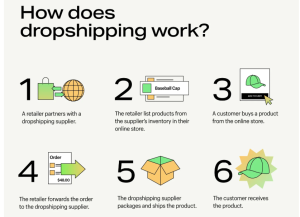
how does dropshipping work

What is Print on Demand?

Print on Demand (POD) is a custom e-commerce model where the retailer does not need to purchase large amounts of inventory upfront. Instead, products are printed and produced only when a customer places an order. This model is often used for custom items like T-shirts, mugs, posters, and more. It allows retailers to offer unique and personalized products without the need for upfront inventory investment.

For more detailed information on Print on Demand, refer to our earlier article on What is Print on Demand? A Beginner’s Guide to the Growing?.

Dropshipping vs Print on Demand: A Comparative Analysis
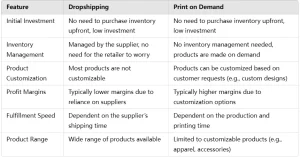
feature Dropshipping

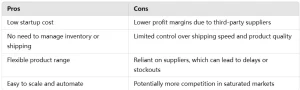
Dropshipping Pros & Cons
Dropshipping Pros&Cons

Print on Demand Pros & Cons


Dropshipping vs Print on Demand: A Comparative Analysis

Which One Should I Choose?

Instead of choosing between dropshipping and print on demand, the goal of this article is to help you gain a deeper understanding of both business models. By reading this guide, you should be able to make an informed decision about which industry or service is the best fit for you. Both models have their unique advantages, and your decision should be based on your business goals, target market, and product offerings.

Conclusion

As we discussed in the Dropshipping Pros section, services like DropSure can help streamline and enhance the dropshipping process. We encourage you to explore your options carefully and choose the model that aligns with your business vision and resources.

Buttom

DropSure is Your Best Partner
22 Years Experience
Affiliate Rebates
100% Quality Guarantee
Top-Up Rewards
10+ Global Warehouses
Custom Branding Support
Smart inventory System
24/7 Customer Support
Get a Quote in 24 Hours
Start Sourcing for Free

Keep Learning

In the fast-paced world of global eCommerce, one business model has opened the door for countless individuals to start their own ventures without the traditional barriers of entry — dropshipping. It’s lean, scalable, and perfect for those who want to turn their spare time into profit. But what happens when a “side hustle” grows beyond your expectations? When your small after-work project starts generating serious income and demands your full attention? This article dives deep into the entrepreneurial journey of transitioning from part-time to full-time dropshipping, exploring the mindset, challenges, financial strategies, and operational changes required to succeed. Whether you’re just starting or scaling up, you’ll find practical lessons and real insights here. 1. The Modern Appeal of Dropshipping Dropshipping has become synonymous with modern online entrepreneurship. It allows anyone with internet access, creativity, and persistence to build a brand without holding inventory. 1.1 How Dropshipping Works The model is simple yet powerful: You set up an online store and list products from suppliers. When a customer places an order, you purchase the product directly from the supplier. The supplier ships it to your customer — you never handle the product yourself. This means: Low startup costs (no inventory needed). Minimal risk (you only pay for items after you sell them). Flexibility (work from anywhere, anytime). For many people, this starts as a side hustle — a way to earn extra income while keeping their day job. But for others, it becomes the first step toward full-time entrepreneurship. 2. The Side Hustle Stage: Building the Foundation Before you can think about quitting your job, you must learn the fundamentals. The early phase is all about testing, learning, and persistence. 2.1 […]

If you’re running an online store or just starting to build your e-commerce business, product selection is the most crucial (and time-consuming) decision you’ll make. Choose the right products, and your store will thrive like a rocket-powered success; choose the wrong ones, and you might end up with unsold inventory, wasted ad spend, and painful clearance sales. Product selection isn’t just about picking what looks good—it requires strategy, data analysis, and a keen market sense. Today, we’ll break down the complete product selection process to help you avoid pitfalls and find truly profitable products for your store! Step 1: Define Your Store’s Positioning to Stay on the Right Track!  Before Selecting Products, Ask Yourself: What Do You Want to Sell? Choosing winning products isn’t about picking something that “looks good.” It requires a clear direction and strategy. Your store’s business model directly affects your product selection approach. If you pick the wrong model, marketing and operations can become unnecessarily difficult. Here are three common store models and their ideal product selection strategies: One-Product Store: Scale a Winning Product to the Top This model focuses on a single high-demand product, using targeted marketing and aggressive advertising to dominate the market. The key is finding a problem-solving product with high demand and manageable competition, then pushing it through Facebook, Google Ads, or TikTok for rapid growth. Best Products for One-Product Stores: ● Functional products that solve a clear pain point (e.g., neck massager, smart water bottle) ● Trendy items with rising social media interest (e.g., TikTok and Instagram viral products) ● Unique, eye-catching products that spark curiosity (e.g., LED sneakers, automatic stir-fry machine) Caution: This model is high-risk. Once ads stop, sales […]

Are you looking for a market with strong consumer spending, considerable profit margins, and relatively mild competition? Australia, the “blue ocean” in the Southern Hemisphere, is opening its doors to global sellers with a purchasing power of US$50,000 per capita, 90% internet penetration, and unique off-season business opportunities! Whether it’s the lunchtime shopping cart of a white-collar worker in Sydney or the weekend camping gear of a family in Perth, consumers here are willing to pay for quality and crave efficient localized service. From the cost formula for overseas warehouse dropshipping to the traffic bonuses on eBay and Amazon, from Catch’s precisely targeted customer base to MyDeal’s low entry barriers—today, this guide will break down every detail of the Australian market’s goldmine opportunities for you. Whether you want to avoid logistical “reefs” or master the global supply chain with strategic inventory allocation, the content that follows will serve as your tactical map for conquering Australia. Ready? Let’s let the data speak and break through with strategy! Why Australia is Suitable for Dropshipping Australia is undoubtedly a market that is very suitable for dropshipping. You will find that it not only has a highly developed economy and strong purchasing power—with a GDP per capita reaching nearly US$50,000—but more importantly, about 90% of Australians are online, and the popularity of smartphones ranks among the highest in the world. This provides unique conditions for the development of online business. Although Australia’s population is not as large as those in Europe or America, consumers have a high purchase frequency and spend significantly per transaction. They are willing to spend money on quality products. Precisely because of this, products often have considerable profit margins. Moreover, […]