
 13 min read
Running a Shopify store is a thrilling journey, but one thing that can make or break your business is shipping. Whether you’re selling locally or internationally, the cost of shipping plays a crucial role in shaping your customers’ buying decisions. In this guide, we’ll walk you through everything you need to know about setting up and optimizing shipping rates in Shopify. By the end, you’ll have a solid understanding of how to set competitive rates, compare shipping options, and use the best tools to streamline your shipping process.
Shipping isn’t just an afterthought—it’s a fundamental part of the customer experience. Customers are more likely to abandon their carts if shipping costs are too high or unclear. In fact, studies show that 60% of online shoppers have abandoned a cart due to unexpected shipping costs. So, how do you keep your customers happy and still maintain a profitable business?
In Shopify, shipping rates are one of the most flexible yet essential aspects of your store setup. They can make or break your business, especially when you’re dealing with different product sizes, weights, and destinations. Setting the right shipping rate can be the difference between a customer clicking “buy” or heading to a competitor’s site.
As a store owner, you want to find the sweet spot between offering competitive rates and covering your costs. So let’s dive into how you can optimize your shipping rates in Shopify, starting with setting them up.
How to Set Shipping Rates in Shopify
Setting up shipping rates in Shopify may seem overwhelming at first, but trust us—it’s much easier than it looks. Let’s break it down step by step.
Step 1: Creating Shipping Zones
The first step in setting up your shipping rates is creating shipping zones. A shipping zone is simply a geographical region that you’ll ship to, such as the United States, Europe, or even specific regions within a country. You can group these regions by country, state, or postal code.
To set up a shipping zone in Shopify:
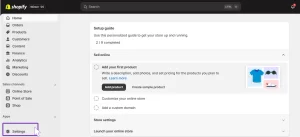
1.Go to your Shopify admin panel.Then click on Settings
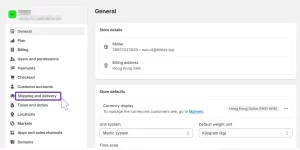
2. Click Shipping and Delivery.
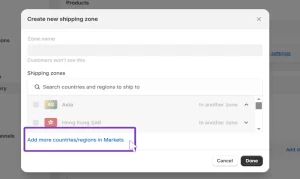
3.Under Shipping Zones, click Add Shipping zone and then Create Shipping Zone.

4.Add the countries or regions you want to ship to and give the zone a name.
Step 2: Choosing Your Shipping Rate Type
Once you’ve set up your shipping zones, it’s time to decide how you want to charge for shipping. Shopify offers two types of shipping rates:

Use flat rate
When you select this option, you can set a fixed shipping cost for a specific zone or condition. For example, you might charge $5 or $10 for all orders.
It is ideal for products with consistent weight and size. Flat-rate shipping simplifies the setup process. It also gives customers clear and predictable costs.
Use carrier or app to calculate rates
This option allows you to integrate with third-party carriers (such as UPS, FedEx, DHL, or USPS) or Shopify apps to automatically calculate real-time shipping rates.
The system dynamically calculates the actual shipping cost based on package weight, dimensions, and destination.
It is Best for products with varying weight and size. It’s also ideal when you need accurate, real-time shipping rates.
Step 3: Adjusting for Product Type and Customer Location
The next step is to adjust your shipping rates according to product type and customer location. For example, if you sell lightweight items, you might want to offer cheaper shipping, whereas heavier items might require higher shipping rates.
Additionally, you should consider how far your customers are from your warehouse. Shipping to a nearby state will be cheaper than shipping across the country or internationally. By setting up rates for specific regions and adjusting for product weight, you can ensure that shipping costs are fair and accurate for both you and your customers.
If you’re curious about shipping rates and want to dive deeper, just hop over to the Shopify Help Center. They’ve got everything you need to know (and probably more than you ever thought you’d need)!
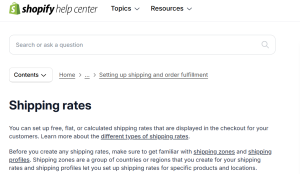
Source: Shopify
Compare Shipping Rates: Finding the Best Deals
Finding the best shipping rates can feel like a daunting task, especially with so many carriers to choose from. But don’t worry, we’ve got your back! In this section, we’ll break down the pros and cons of major shipping carriers, compare their rates, and share tips on how you can save money while getting your products to customers on time.
Shipping Carriers: UPS, FedEx, DHL, and USPS
Each shipping carrier offers unique advantages depending on where you’re shipping, what you’re shipping, and how fast you need it to arrive. Let’s take a closer look at the most popular ones.
UPS
UPS is a reliable choice for both domestic and international shipping, suitable for businesses of all sizes. Here’s a brief overview of its pros and cons:
Pros:
• Reliability: UPS offers dependable domestic and international shipping, especially strong in North America and Europe.
• Variety of Services: Provides options like next-day, two-day, and standard delivery to meet different needs.
• Global Coverage: Strong international network, able to reach remote areas.
• Custom Solutions: Offers business discounts and logistics tools for high-frequency shippers.
Cons:
• Expensive Expedited Services: Next-day and two-day services can be costly.
• Limited Service in Remote Areas: Fewer delivery options in some remote regions compared to DHL.
Key Tip:UPS is ideal for businesses needing reliable and flexible shipping solutions, especially for international shipments to North America and Europe. However, expedited services can be expensive, so consider the cost when choosing faster delivery options.
FedEx
FedEx is a standout choice when speed and reliability are paramount, especially for time-sensitive shipments. Here’s a more detailed breakdown of its strengths and weaknesses:
Pros:
• Speed & Reliability: FedEx is well-known for its fast delivery services, especially with next-day and 2-day options, making it ideal for businesses with tight shipping timelines.
• Excellent Tracking: The tracking system is robust, providing customers and businesses with detailed updates throughout the shipping process.
• Business Discounts: FedEx offers discounted rates for high-volume shippers, which can significantly reduce costs for businesses that need to ship frequently or in bulk.
• Global Reach: FedEx’s international services are strong, especially for premium services like Express International, which guarantees fast delivery to major global markets.
Cons:
• Cost: While the fast shipping services are reliable, they can be expensive, particularly for standard shipping options. This can be a drawback for businesses looking to minimize shipping costs.
• Limited Delivery Options in Some Countries: In certain regions, FedEx may not offer the same variety of delivery options as UPS, especially in more remote or less-developed countries where UPS has a stronger presence.
Key Tip: FedEx is your go-to choice for fast, reliable shipping, especially if time is critical. Its expedited services are a great fit for businesses that need to ensure shipments arrive on time, whether domestically or internationally. However, if cost is a concern and you’re shipping to regions where FedEx doesn’t offer extensive services, you may want to consider alternatives like UPS or DHL.
DHL
DHL is indeed a strong contender for international shipping, particularly when you’re targeting regions like Europe and Asia, where their network is well-established. Here’s a quick recap and a few additional thoughts:
Pros:
• Global Reach: DHL has a massive presence globally, which means faster and more reliable international shipping, particularly to destinations where other carriers might be less efficient.
• Speed: Typically, DHL offers faster delivery times than some other services, particularly for international shipments.
• Tracking & Reliability: DHL is known for excellent tracking and reliable delivery, which can be crucial when shipping internationally.
• Good for Remote Regions: In countries where UPS and FedEx might have limited reach, DHL often steps in with more direct routes and delivery capabilities.
Cons:
• Domestic Limitations (U.S.): While DHL excels internationally, its domestic services in the U.S. aren’t as robust as UPS or FedEx, which could make it less appealing for purely domestic shipments.
• Price: As you mentioned, DHL can be more expensive for long-distance international shipping compared to other carriers, especially when shipping to or from the U.S.
Key Tip: If you’re running a business with an international customer base—especially in Europe and Asia—DHL is an excellent choice for ensuring fast, reliable, and hassle-free delivery. However, for purely domestic U.S. shipments, it might not be the best option unless you’re shipping internationally as well.
Shipping Rates Comparison Chart
Here’s a quick reference chart that compares shipping rates for a 2-lb package shipped from the U.S. to a domestic destination, as well as internationally (to the UK). Rates are approximations, and actual costs will vary depending on factors like distance, package size, and delivery speed.
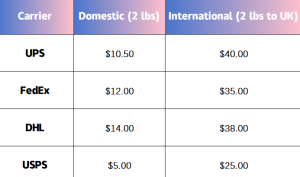 Note: These rates are based on standard shipping options and may change depending on the size, weight, and destination of your package.
Domestic vs. International Shipping: What to Expect
Domestic Shipping: Domestic rates are generally cheaper, but keep in mind that each carrier has different pricing structures for different zones. For example, shipping across the country with UPS or FedEx might cost more than if you were just sending a package across town.
International Shipping: When you ship internationally, you’ll see a sharp increase in rates due to customs duties, international taxes, and longer distances. DHL and FedEx tend to be faster, but they also come with higher prices. USPS, on the other hand, is the most affordable option for light international packages but may take longer and provide less comprehensive tracking.
Who Has the Cheapest Shipping Rates?
Now the big question: who offers the cheapest shipping rates? Well, it depends on a few factors:
• USPS: Typically, USPS offers the cheapest rates for domestic shipping, especially for small packages. It’s an excellent choice for lightweight items under 1 lb.
• UPS and FedEx: While both companies tend to be more expensive, they are often more reliable for larger or heavier shipments. They also offer expedited shipping options, which can be valuable for time-sensitive orders.
• DHL: For international shipping, DHL is often the go-to choice for many eCommerce stores. While it’s not always the cheapest, it tends to offer better service and delivery times to global destinations.
When it comes to choosing the best shipping rates, it’s important to compare pricing based on the size, weight, and destination of your packages. Don’t forget to use Shopify’s real-time carrier rates to get a true sense of how much you’ll be paying for shipping at checkout.
Setting up and optimizing shipping rates in Shopify doesn’t have to be difficult. By creating the right shipping zones, selecting the appropriate shipping rate types, and leveraging apps and tools, you can offer competitive and transparent shipping rates to your customers. Whether you’re shipping domestically or internationally, there’s a solution out there that’s perfect for your store. So, take the time to fine-tune your shipping strategy, and you’ll be one step closer to providing the best customer experience possible!