








< Blogs

Shopify or WordPress: Which One is Better for Dropshipping?

Vivan Z.
Created on November 21, 2024 – Last updated on February 6, 20255 min read
Written by: Vivan Z.

Shopify vs WordPress

If you’re starting a dropshipping business, Shopify and WordPress are two popular platforms to choose from. Both have their strengths and weaknesses, but the right one depends on your skills, business needs, and future plans. Let me break it down in simple terms to help you decide.


Shopify: Easy and Perfect for Beginners

Shopify

Shopify is made for e-commerce, and it’s super simple to use. Don’t know coding? No problem! Shopify has tons of ready-to-use templates. It’s like building with Lego blocks—you just drag, drop, and create your store. It comes with built-in tools for payments, shipping, and managing orders. This saves you time and lets you focus on selling.

shopify template

Shopify also has a massive app store. You’ll find tools like Oberlo and Importify to quickly add products, Klaviyo and MailChimp for email marketing, and Privy or Upsell to boost sales. These apps make dropshipping smooth and stress-free.
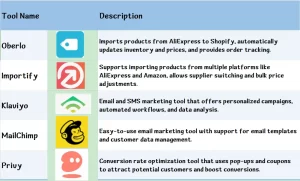
tools

But Shopify isn’t cheap. The basic plan starts at $29/month, and as your store grows, you might pay more, especially if you use third-party payment gateways. Also, if you want very specific designs or functions, Shopify can feel limiting.


WordPress: Flexible and Powerful, but Needs Tech Skills

Wordpress

WordPress, on the other hand, is a powerful option if you want more control. By adding the WooCommerce plugin, you can turn WordPress into a full e-commerce platform. The biggest advantage? Flexibility. You can design your store however you like and customize features such as payment methods or shipping options.
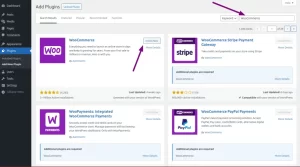
Woocommerce
Searching and showing the WooCommerce plugin via the Add Plugin WordPress screen.

WordPress is open-source, meaning there are endless plugins and resources available. It’s also cheaper—just pay for hosting and a domain, which costs less than Shopify’s monthly fees.

But here’s the catch: WordPress is not beginner-friendly. If you’re not tech-savvy, setting up plugins, payment systems, and optimizing your site can be overwhelming. And when things go wrong, there’s no centralized support. You’ll need to figure it out yourself or rely on online forums.


Who Should Choose Shopify?

Shopify is perfect if you’re new to e-commerce or want to start fast. It’s simple, has everything you need in one place, and their support team is always there to help. You can focus on selling without worrying about technical stuff.


Who Should Choose WordPress?

Go with WordPress if you know a bit about websites or don’t mind learning. It’s highly customizable and great for unique designs or features. Plus, it’s cheaper long-term. If you’re planning to scale and want full control, WordPress is a smart choice.


Which Platform Has Lower Long-Term Costs: Shopify or WordPress?

dropshipping

When comparing Shopify and WordPress, WordPress generally has lower long-term costs, especially if you manage your site efficiently. Here’s why:


WordPress: Lower Long-Term Costs

No Ongoing Subscription Fees
WordPress itself is free. You’ll only pay for hosting (starting around $5–$15/month), a domain (around $10–$20/year), and any plugins or themes you choose to add. Many plugins are free or have affordable one-time fees.

Customizable for Budget
WordPress allows you to scale costs based on your needs. If you’re on a budget, you can use free plugins and themes. As your business grows, you can invest in premium tools without paying a fixed monthly fee.

No Transaction Fees
WordPress doesn’t charge transaction fees unless you use certain payment gateways that have their own fees. You’ll save more as your revenue grows.


Shopify: Higher Costs Over Time

Monthly Subscription Fees
Shopify starts at $29/month and can go up to $299/month for advanced plans. These fees are unavoidable as long as you use the platform.

Transaction Fees
If you use a third-party payment gateway (like PayPal or Stripe), Shopify takes an additional transaction fee (0.5%–2%), which can add up as your sales increase.

App Costs
Many Shopify apps require monthly fees, and these can stack up quickly if you need multiple tools for your store.


Final Advice

If you’re a beginner, Shopify is the way to go—easy, quick, and hassle-free. If you’re more experienced or willing to learn, WordPress gives you more flexibility and control. Either way, pick the one that fits your needs, and take the first step toward building your dropshipping business. Success is waiting for you!

Buttom

DropSure is Your Best Partner
22 Years Experience
Affiliate Rebates
100% Quality Guarantee
Top-Up Rewards
10+ Global Warehouses
Custom Branding Support
Smart inventory System
24/7 Customer Support
Get a Quote in 24 Hours
Start Sourcing for Free

Keep Learning

In the early days of dropshipping, you could simply find a trending product on AliExpress, throw together a quick Shopify store, run some Facebook ads, and watch the orders roll in. But those days are gone. Today, competition is fierce, customer expectations are higher, and generic products are everywhere. The dropshipping entrepreneurs who still win big are not the ones racing to the bottom on price—they’re the ones building brands. Brand-driven dropshipping is no longer optional; it’s the new standard. Customers want more than products—they want identity, trust, and consistency. If your store feels like a copy-paste template selling the same items as 500 other sellers, it becomes nearly impossible to scale sustainably. This article is your complete 4,000-word guide to transforming your dropshipping store into a strong, differentiated brand with loyal customers who buy again and again. We’ll cover branding strategies, product selection, storytelling, packaging, customer experience, and retention—all tailored specifically for the dropshipping model. Let’s dive in. 1. The Rise of Brand-Driven Dropshipping 1.1 Why Branding Matters More Than Ever Dropshipping used to be a quick arbitrage business. Buyers didn’t care what the store looked like—they just wanted the product. Now, customers are overwhelmed with options, ads, and impulse-buy offers. Their skepticism is higher, and their willingness to trust a no-name store is lower. Branding solves that problem. A strong brand: Creates trust before the customer ever sees the product Increases perceived value and justifies higher pricing Makes your ads convert better Reduces refund rates Encourages referrals and word-of-mouth Builds long-term customer loyalty You’re no longer competing with “other Shopify stores.” You’re competing with Amazon. And Amazon always wins on speed, convenience, and price. What you can win […]

In today’s highly competitive cross-border e-commerce landscape, the accuracy of product selection directly determines your profitability. Choosing the wrong product could lead to slow sales and losses, but selecting the right one allows you to seize market trends and achieve explosive orders. With the vast number of products available in the global market, how can you quickly identify best-sellers? This is where professional product research tools come into play. Whether you’re a new seller or an experienced merchant, leveraging data-driven product selection strategies can make your decisions more informed and reduce trial-and-error costs. Today, we’ve curated seven powerful product research tools to help you gain precise market insights and boost your success in cross-border e-commerce! PickFu Want to know if your product will be a hit overseas? Don’t guess—ask the consumers! PickFu eliminates the need for complex data analysis by providing direct feedback from real buyers, making your decision-making process easier. On PickFu, you can launch open-ended surveys or A/B tests to ask your target audience directly. Their shopping habits, interests, and preferences—everything is laid out for you. Plus, you can filter respondents to ensure the feedback aligns with your target market. If you’re an Amazon seller looking to validate a product’s market potential or struggling to choose between designs, PickFu is your go-to solution. Run a poll and let consumers tell you what they prefer—no more gambling on the market. With 15 million global consumers, PickFu allows you to refine your audience selection based on age, interests, shopping location, and more, ensuring you receive the most relevant insights. That way, every decision you make is backed by real data, not just gut feelings. Don’t let market trends dictate your […]

Cross-border e-commerce sellers know that choosing an overseas warehouse is a critical step, yet even a small misstep can affect shipping efficiency or lead to significant losses. Lost goods, low listing rates, delayed shipments, skyrocketing storage fees… these are common pain points. So, how can you find the right overseas warehouse to truly boost operational efficiency? Five years of cross-border experience have distilled five key points to help sellers avoid pitfalls. Systematization ability  Overseas warehouse, you may first look at the warehouse area is not big, more or less labor, but the real impact on efficiency, is it in the end “smart or not”. How to judge the systematization ability of overseas warehouse? Look at these three points System docking ability If your overseas warehouse still relies on Excel to manually enter orders, then you really need to consider changing. A good overseas warehouse should be docked to your store with one click, so that the order data is automatically synchronized, eliminating the trouble of manual import. You can just ask: ● What platforms are supported? Now the mainstream cross-border platforms are TikTok, Temu, Shein, Amazon, eBay, can your overseas warehouse directly dock? ● Can you choose the logistics? Are they bound to only one courier, or can they integrate UPS, FedEx, DHL, USPS, etc. to help you intelligently match the optimal program? ● Is it easy to manage orders? Can you manage all the orders in one system instead of spreading the forms around? Reality Case: You have 1000 orders, one click to synchronize and the warehouse starts processing immediately. Compare that to manually entering 1,000 orders, which you can do until dark just by entering them. Intelligent inventory […]