 18 min read
With an 8.5% year-on-year growth, Japan’s e-commerce sector is projected to break through ¥152 trillion in 2024, continuing its dominance as the fastest-growing mature market in Asia. This nation of 120 million high-net-worth consumers is driving unprecedented momentum, fueled by a 94% mobile payment adoption rate and a 28% cross-border e-commerce growth rate—making it a strategic growth engine for global brands.
Are you planning to enter the Japanese market, or seeking to understand the platforms Japanese consumers trust most?
Mastering the local e-commerce landscape is the first step to success. From generalist platforms to niche verticals, Japan’s ecosystem offers unique opportunities. This article will analyze the top 6 mainstream e-commerce platforms in Japan, helping you decode market trends and seize growth potential.
Amazon Japan
Platform Website:https://www.amazon.co.jp
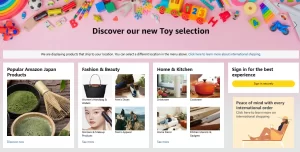
Amazon Japan holds a significant position in Japan’s e-commerce market, with an estimated monthly visit count of approximately 601.7 million, highlighting its popularity and substantial market influence.
Founded in 1994 by Jeff Bezos in Bellevue, Washington, Amazon began as an online bookstore. Over time, it transformed into a comprehensive shopping platform where consumers can easily purchase a wide variety of products, including books, clothing, food, electronics, and streaming services.
Seller Fee Structure
For every transaction that a seller completes, Amazon charges a fee based on a fixed percentage. The sales commission percentage varies depending on the product category. For example, the commission for fashion items may range from 8% to 15%, while consumer electronics typically range between 8% and 15%.
If a seller utilizes Amazon’s FBA (Fulfillment by Amazon) service, additional fees will apply. These include storage fees, which are charged for storing products in Amazon’s warehouses and are calculated based on the time period as well as the size and weight of the items; and shipping fees, which are based on the weight, dimensions, and delivery region of the products.
Recommended Reasons
It is a hassle-free and efficient solution that provides substantial traffic and minimizes risks. Additionally, it offers an opportunity for global expansion, making it especially well-suited for small sellers who want to test the waters in the Japanese market without handling logistics and advertising on their own.
Rakuten
Platform Website: https://www.rakuten.co.jp
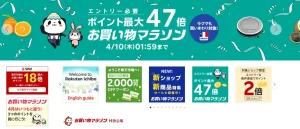
Rakuten, is a prominent e-commerce platform in Japan, recording an average of approximately 278.6 million monthly visits in 2022 . This substantial traffic underscores its significant position in the Japanese e-commerce market.
Established in 1997, Rakuten has expanded its offerings to include a wide array of products such as electronics, clothing, accessories, home appliances, and cosmetics, catering to various aspects of daily life.
In 2016, Rakuten acquired Fablic, the provider of the consumer-to-consumer (C2C) marketplace app FRIL . Subsequently, in 2018, Rakuten integrated its own C2C marketplace app, Rakuma, with FRIL, relaunching the merged service under the Rakuma brand . This strategic move aimed to consolidate resources, expand market share, and enhance competitiveness. Rakuma capitalized on the growing trend of mobile internet usage, offering a convenient platform that attracted a large user base. Its peer-to-peer transaction model not only enabled consumers to reuse idle items but also provided entrepreneurs and small businesses with low-cost startup opportunities, leading Japan’s peer-to-peer market.
Seller Fee Structure
Sellers are required to pay an annual fee based on the type of their store. For a regular store, the annual fee is approximately 54,000 yen. For brand stores and premium (special selection) stores, the fees are higher—108,000 yen and 216,000 yen respectively—with each tier receiving dedicated resource support.
For example, brand stores can benefit from having an independent brand page, while premium stores enjoy priority display and customer service support. However, the increased fees must be balanced against the expected revenue. In terms of transaction commissions, Rakuten charges a base rate ranging from 7% to 10% depending on the product category.
Recommended Reasons
Rakuten has been operating in Japan for over 20 years, and users feel so confident buying on the platform that they say it’s like “buying with your eyes closed” without any risk of disappointment. Selling on Rakuten is equivalent to setting up your store in the Ginza district; the brand credibility instantly surpasses that of an independent website. This makes it especially suitable for foreign sellers who want to quickly break into the Japanese market.
Yahoo! Auctions Japan
Platform Website: https://auctions.yahoo.co.jp
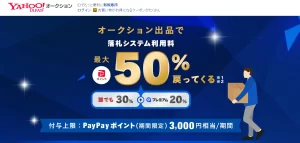
Yahoo! Auctions Japan, established in 1998, is one of the earliest online auction platforms in Japan, entering the market before eBay Japan. Its development relied on the enormous user base of Yahoo! Japan, and it had already amassed over 1 million registered users in its early days.
Initially focused on auctions, Yahoo! Auctions gradually introduced an “instant sale” feature (i.e., fixed-price sales) to cater to different seller needs. After 2000, the platform further expanded its range of categories to become a comprehensive marketplace for second-hand goods.
According to data from the Japan IT Research Center in 2023, Yahoo! Auctions holds approximately a 60% share of Japan’s C2C auction market, far surpassing Rakuten Auctions. In high-value categories such as second-hand luxury goods and electronic products, Yahoo! Auctions ranks first in user trust.
Seller Fee Model
Yahoo Auction does not charge sellers an annual store fee, but a deposit of 5,000 yen is required (which can be deducted in case of trading violations and will be refunded if the seller complies with the rules). Sellers can list auction items for free, but a fixed listing fee of 50 yen per item is charged for immediate sales (fixed – price sales).
After an auction item is sold, a commission is charged at a percentage. The basic commission rate ranges from 5% to 15%, varying by category: for low – priced items (such as books and CDs), the rate is usually 8% to 10%, and for high – priced items (such as home appliances and luxury goods), it is 5% to 8%. If the transaction price of an item exceeds 1 million yen, an additional high – value transaction fee of 1% to 3% may be charged.
Recommended reasons
The platform charges a maximum of 8% (Rakuten charges at least 10%), and there is no monthly fee. You only pay for each successful sale. If your products don’t sell, you can withdraw. The cost of testing the Japanese market is even lower than opening a milk tea shop. The platform’s users are mainly “bargain hunters”, so listing items at a low price for auction or at a fixed price can lead to quick sales.
Mercari
Platform URL: https://www.mercari.com/jp
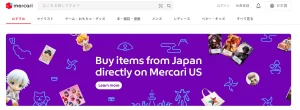
As a rising star in the second – hand e – commerce market, Mercari has rapidly emerged with its “social + lightweight” operation strategy. Launched in 2013 as a mobile application, it targeted the convenience needs of mobile users from the very beginning. Users only need to take a photo of the item and upload it, and the AI can automatically identify the category and recommend a reasonable price. The entire listing process can be completed in as fast as 3 minutes. This “lazy – friendly” design has significantly lowered the threshold for ordinary people to deal with their second – hand items.
Targeting users mainly aged between 20 and 30, more than 60% of the items in Mercari’s product categories are “fast – moving” second – hand goods such as trendy clothing, limited – edition collectibles, and small household appliances. These high – frequency and highly – talked – about items are naturally suitable for the social sharing culture of young people.
In addition, Mercari has made full use of its community features. Users can not only add friends and bargain privately but also join interest groups (such as “Sneaker Exchange Group” and “Anime Figurine Zone”). They can even use the “group – buying” function to jointly purchase the same item. This social stickiness has enabled the platform to have over 3 million daily active users, and its user repurchase rate ranks among the top in the second – hand e – commerce industry.
Seller Fee Model
Mercari’s seller fee model is designed to be relatively simple and straightforward.
First of all, the commission rate is tiered according to the price of the product. The basic rate ranges from 3% to 10%. Commissions for low – priced items (such as clothes and small items) are the lowest, while those for medium – to high – priced items (such as electronics and household appliances) are slightly higher.
If you’re selling high – end items, like luxury handbags or cameras, and choose the “Mercari Now” instant inspection service, the commission will increase to 10%. However, the advantage is that you can receive payment within 1 hour after the platform inspects the item, without having to wait for the buyer to pay. This is very cost – effective for sellers in urgent need of money, and the cash – flow efficiency far exceeds that of traditional transactions.
Apart from the commission, Mercari doesn’t charge an annual store fee or any fixed fees. Registration is completely free, which is different from Yahoo Auction’s rule of requiring a 5,000 – yen deposit (although Yahoo’s deposit is refundable).
Recommended reasons
It offers extremely simple operations, allowing you to open a store in just 3 minutes. There’s no need for professional operation. All you have to do is take a photo of the product on your phone, fill in the title and set the price, and select the shipping method to list the item. The system automatically recommends the price range of similar products and supports one – click copying of popular tags, reducing the decision – making cost for newbies.
ZOZOTOWN
Platform URL: https://zozo.jp
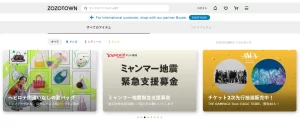
Zozo Town is a Japanese e – commerce platform specializing in fashion and footwear, established in 2004. Its predecessor is the long – standing mail – order brand Start Today, which has been deeply involved in the Japanese market for decades, laying a solid foundation for the development of Zozo Town. With the concept of brand inheritance and continuous innovation, Zozo Town has quickly risen to become one of the most popular fashion shopping websites in Japan since its launch.
On the Zozo Town platform, you can find a diverse range of fashion products from both local and international sources. The platform not only includes mainstream big brands but also carefully selects many niche brands, providing consumers with a unique shopping experience and meeting the fashion and personalization needs of various consumers. The user – friendly interface and precise product classification on the platform enable consumers to easily find their favorite clothing and footwear products and enjoy convenient and efficient shopping services.
Seller Fee Model
ZOZOTOWN does not charge a one – time registration fee, but sellers are required to pay a monthly system usage fee. The fee for standard stores ranges from 5,000 to 15,000 yen, while for brand flagship stores, it is negotiated according to the cooperation level (usually over 30,000 yen). Newly – registered sellers need to deposit a security deposit ranging from 100,000 to 500,000 yen, depending on the product type. The security deposit for clothing is relatively low, while higher amounts are required for luxury goods or high – priced items. The security deposit is mainly used for compensation in case of trading disputes and can be fully refunded if there are no violations after the contract terminates.
Recommended reasons
ZOZO TOWN has 25 million users, with 70% being women aged between 20 and 39. They have strong spending power and prefer fast – fashion and designer brands. It is suitable for fashion sellers and the fast – fashion supply chains in China and Southeast Asia.
Wowma
Platform URL: https://wowma.jp
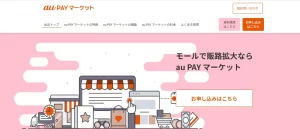
Wowma is a Japanese online marketplace. As a well – known e – commerce platform in Japan, it was founded in 2000 by the telecommunications giant KDDI Group. The platform has a product library of over 20 million SKUs, covering a full range of categories from beauty products (such as the Japanese domestic brand Shiseido) to electronic products (such as mobile phone accessories of the au brand). It is especially characterized by “season – limited products” and “co – branded items”. For example, it collaborates with anime IPs to launch limited – edition peripherals or offers traditional decorations for the Japanese Obon Festival.
Seller Fee Model
Sellers do not need to pay a one – time registration fee when joining the platform, but they are required to pay a monthly basic store fee. The basic fee varies according to the store level and category. For example, the monthly fee for an ordinary store usually ranges from 5,000 to 20,000 yen, while flagship stores or brand stores may incur higher fees.
Transaction commission is the core charging item, adopting a tiered commission model based on sales volume. The commission rates vary significantly among different product categories: the clothing category usually has a commission rate between 8% – 12%, the consumer electronics category is about 5% – 8%, and the food category may be as low as 3% – 5%. For high – volume stores with monthly sales exceeding 2 million yen, the platform offers a stepped commission discount, with a maximum reduction of 3 percentage points for some categories.
The advertising and promotion system mainly includes two forms: keyword bidding (CPC) and display space purchase (CPM). The starting bid price for the top recommended position on the product detail page is about 50 yen per click, and the display fee for the focus image on the homepage can reach over 100,000 yen per day. The platform also provides value – added services such as data analysis and inventory management. The annual fee package for the intelligent product selection tool starts at about 120,000 yen, and the logistics hosting service charges a fulfillment service fee of 3% – 5% based on the order volume.
Recommended reasons
The platform has relatively low traffic and overall sales volume, making it suitable for small sellers who are just starting out. For large – scale sellers with high ambitions, it may not be worth the effort. Although its parent company is a top – tier corporation, we do not think Wowma can stand out in the highly competitive B2C industry. Perhaps quickly developing unique features is the way forward.
Qoo10 Japan
Platform URL: https://www.qoo10.jp
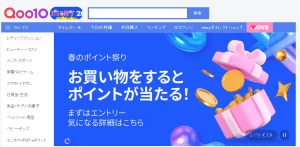
Operated by eBay Japan, Qoo10 Japan has successfully ranked as the fourth – largest e – commerce market in Japan, only after Rakuten, Amazon, and Yahoo Shopping, thanks to its unique market positioning and operation strategy. Its core user group focuses on women aged between 10 and 30. This group has a strong demand for fashion, beauty, and health products, which has prompted Qoo10 to vertically specialize its product line, forming a differentiated competitive advantage centered around female consumption.
Through a dual – track strategy of “high cost – performance + targeted marketing”, the platform not only covers local brands but also introduces featured products from Southeast Asia and South Korea, such as Malaysian snacks and affordable South Korean beauty products (e.g., Etude House), filling the gap in the Japanese market for “affordable luxury goods”.
Seller Fee Model
As the fourth – largest e – commerce platform in Japan, Qoo10 Japan’s seller fee model is centered around “low entry barriers + flexible commissions”, catering to the needs of both small and medium – sized sellers and brand merchants. Sellers need to pay a one – time fee of about 100,000 yen and provide compliance documents when registering. Subsequently, the transaction commission varies according to different product categories, with higher rates for beauty and fashion products and lower rates for household and food items.
In terms of advertising fees, search ads are charged on a cost – per – click (CPC) basis, with a unit price of about 10 – 50 yen. Display ads are charged on a cost – per – sale (CPS) basis, with a rate of 3% – 5%. Sellers can also bid to participate in limited – time promotional activities, and the cost of resource positions is about 50,000 – 200,000 yen per time.
Recommended reasons
Qoo10 is like a “mini – supermarket” specifically for beauty products, skincare items, health products, and affordable fashion items, making it particularly suitable for merchants who want to sell these products. Although competition has become increasingly fierce in recent years and the platform’s growth has slowed down compared to previous years, sellers can still make money gradually by choosing the right products and operating with dedication. It is especially suitable for small merchants with limited budgets who want to test the waters. They don’t need to invest a large amount of money and can still achieve some success relying on the platform’s traffic and stable customer base.
Summary
The Japanese e – commerce market is large – scale and developing rapidly. It has a high – net – worth consumer group of 120 million people, with a high penetration rate of mobile payment and a fast – growing cross – border e – commerce sector. It serves as a strategic growth engine for global brands. The ten major mainstream e – commerce platforms introduced above each have their own characteristics, offering diverse options for different types of sellers.
| Platform Name | Platform Features | Suitable Seller Types |
|---|---|---|
| Amazon Japan | Large traffic and perfect services | Small merchants who want to test the Japanese market without getting too involved in logistics and advertising; Sellers aiming to expand global business |
| Rakuten | High brand credibility and a large user base | Foreign sellers who want to quickly enter the Japanese market |
| Yahoo! Auctions Japan | Features auctions with relatively low commission rates | Sellers who want to test the Japanese market at a low cost and sell low – priced products |
| Mercari | Extremely simple operations and strong social attributes | Novice sellers |
| ZOZO TOWN | Focuses on the fashion field, with target users having strong spending power | Fashion sellers; Fast – fashion supply chains from China and Southeast Asia |
| Wowma | Rich product range and featured products | Small sellers who are just starting out |
| Qoo10 Japan | Focuses on female consumption | Small merchants selling beauty products, skincare items, health products, and affordable fashion items |
When choosing a platform to enter, sellers should comprehensively consider factors such as their own product characteristics, target customer groups, operational capabilities, and budgets to fully utilize the advantages of each platform, seize the business opportunities in the Japanese e – commerce market, and achieve business growth.